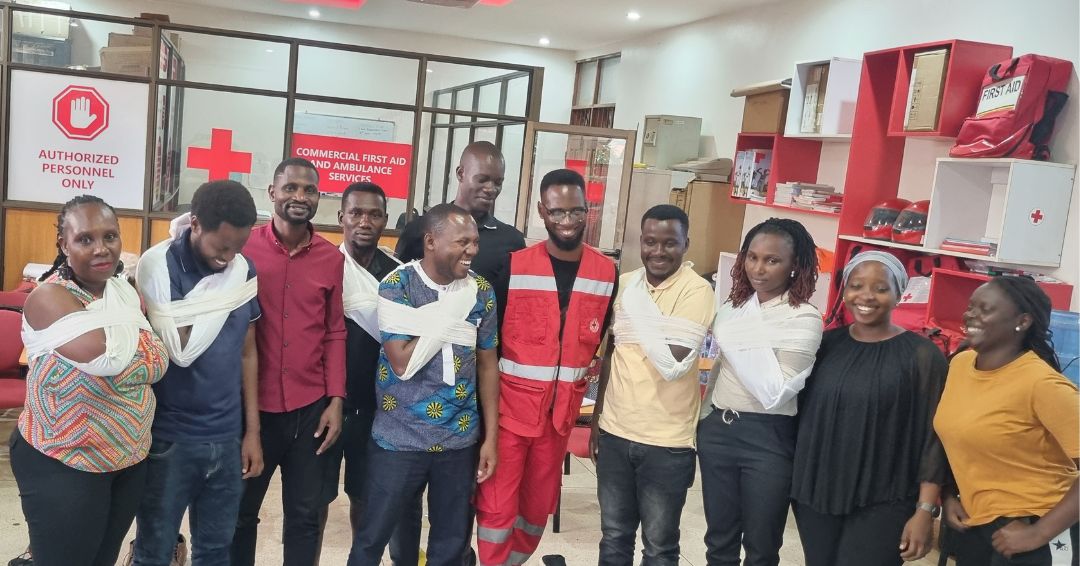
A team of six participants from the Agroforestry Paradox - Climate Clever Coffee (APCCO) project in Uganda successfully completed a comprehensive two-day First Aid at Workplace Training organized by the Uganda Red Cross Society (URCS). The training, held at the URCS headquarters, equipped participants with essential life-saving skills tailored for handling common workplace emergencies.
The group included four PhD students, one scientist, and one project assistant working under the APCCO project—File No. 23-06-KU, funded by the Danida Fellowship Centre. The aim of the training was to empower participants with practical knowledge to respond effectively to injuries and emergencies in a timely and competent manner.
Comprehensive Two-Day Curriculum
The training was delivered by certified URCS trainers—Mr. Isa Kitonsa on Day One and Mr. Isaac Taremwa on Day Two—covering a wide range of first aid topics including:
-
Introduction to First Aid and Emergency Response
-
The Triangle of Life and Golden Minutes
-
CPR and Recovery Position
-
Managing Shock, Fainting, Choking, and Asphyxia
-
Treatment for Burns, Bleeding, and Fractures
-
Response to Animal Bites and Insect Stings
-
Safe Transportation of Casualties
Through live demonstrations, hands-on practice, and simulations, participants learned how to assess emergency situations, administer CPR, stop severe bleeding, tie slings for fractures, and perform safe casualty transportation techniques.
Certified Competence
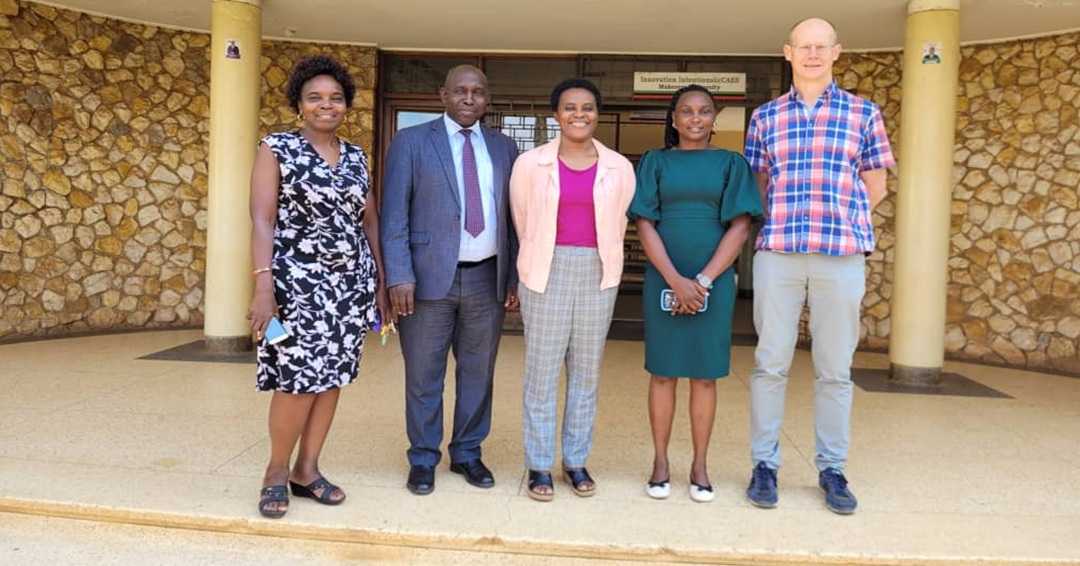
The training concluded with a post-assessment exam to evaluate participants' knowledge and practical skills. Upon successful completion, internationally recognized First Aid certificates—valid for two years—were awarded to the participants. The official handover ceremony was held at Makerere University, where the certificates were presented by Dr. Jenipher Bisikwa, the APCCO project coordinator at the university.
Empowering Workplace Safety
“This training has greatly boosted our confidence to act swiftly during workplace emergencies. The emphasis on the three Ps of first aid—Preserve life, Prevent further injury, and Promote recovery—was a key takeaway,” noted one of the participants.
The APCCO project continues to integrate safety and capacity-building initiatives into its operations, contributing not only to climate-smart coffee production but also to ensuring the well-being of its researchers and field staff.
With the unveiling of this journal, we aim to offer a reputable academic platform that provides unparalleled opportunities for researchers and academicians to share and disseminate their high-quality research papers.
The E-Journal has seven articles relating to various aspects which address societal and governmental concerns such as open access for broader information dissemination, rigorous peer review to ensure research quality, transparency in research practices, and diverse representation to mitigate biases. Additionally, they engage with ethical considerations, data sharing for reproducibility, and collaboration to foster innovation, thereby contributing to informed policymaking and advancing knowledge for the betterment of society.