By Kigambo Monica | July 2025
As part of the joint doctoral training program under the APCCO project, Professor Anders Ræbild, an agroforestry expert from the University of Copenhagen, conducted a supervisory visit to Uganda from 7th to 13th July 2025. The visit was organized under Work Package 1 (WP1) and aimed at providing hands-on supervision to PhD candidate, Ms. Justine Nakibuule, while also facilitating collaborative planning with local project partners for the successful design and implementation of her field experiments.
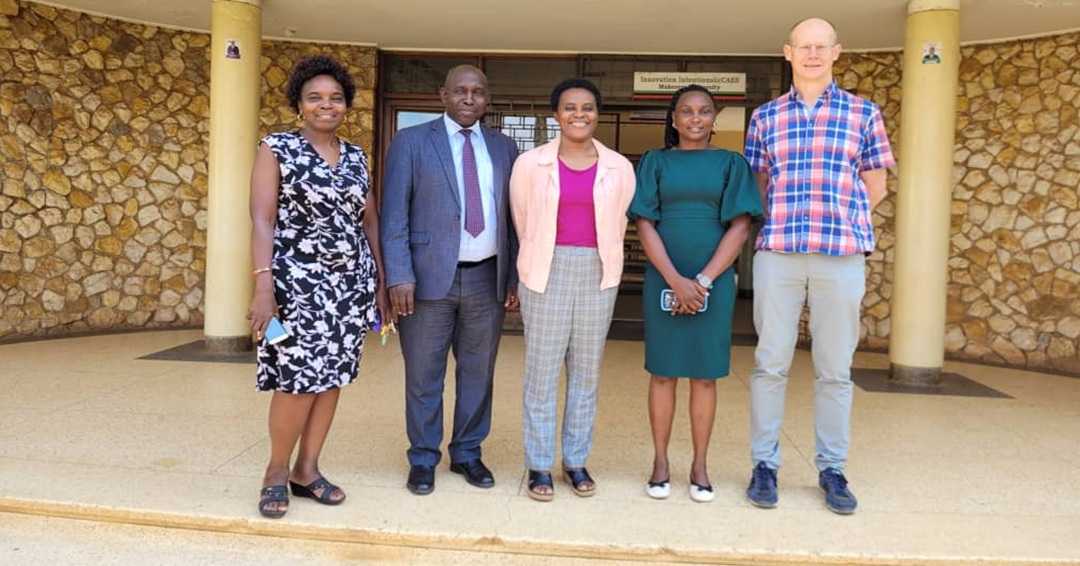
The visit commenced at Makerere University, where Professor Ræbild was warmly received by a delegation of scientists led by the Dean of the College of Agricultural and Environmental Sciences (CAES). The Dean offered institutional guidance, particularly on the legal and academic procedures necessary to support the joint PhD program, and reaffirmed the university's commitment to international academic partnerships. This was followed by a detailed supervisory meeting, during which Ms. Nakibuule presented her research progress. She received constructive feedback on various technical aspects, including experimental design, site and tree selection, and logistical planning for field implementation.
Professor Ræbild’s next stop was the National Agricultural Research Organisation – Coffee Research Institute (NaCORI) in Kituza, where he was officially welcomed by the administration and the scientists. A presentation by Ms. Nakibuule outlined key milestones in her doctoral research and highlighted emerging issues. This was followed by an in-depth discussion and a joint field visit to the proposed on-station shade trial site, where design feasibility and logistical arrangements were reviewed.
In the subsequent days, the team comprising scientists from NaCORI, the student, and Prof. Ræbild, conducted a site assessment for the proposed drought experiment in Butalangu sub-county, Nakaseke district. Despite initial optimism, the site was found unsuitable due to logistical and security concerns. In response, the team redirected efforts to evaluate a new site at NaCORI, which was later confirmed to be more viable for the drought trial.
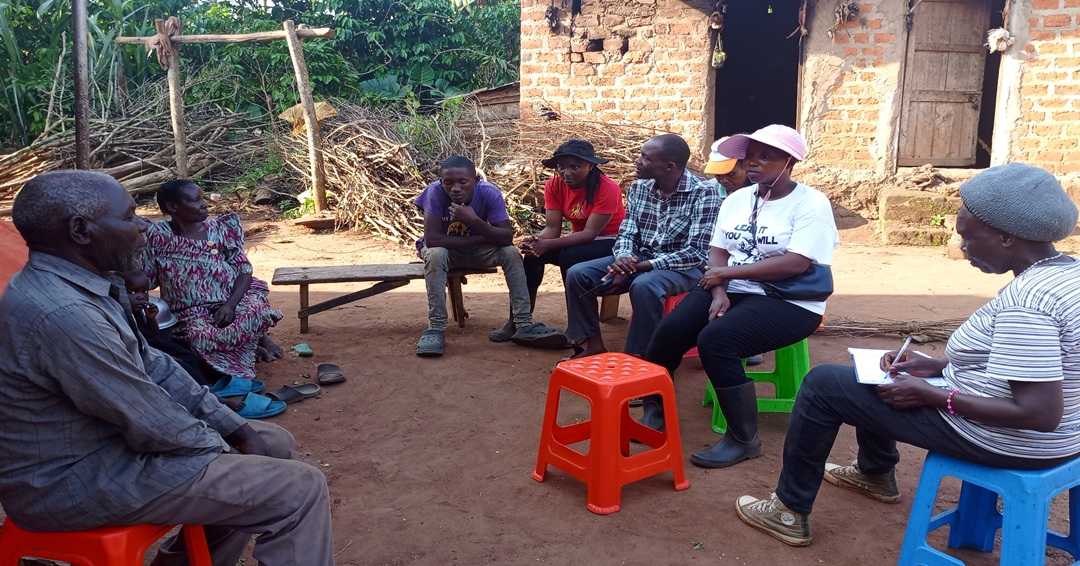
Further field activities included farm visits in Kisoga village, Wakyato sub-county, where discussions centered on shade tree species, spatial layouts, plot design, and practical methodologies for data collection. Practical planning continued with visits to suppliers for shade nets and polythene sheets. Though only partial materials were available, their quality was verified, and procurement plans were laid.
The visit wrapped up with a focused meeting between the student and her supervisor. Together, they synthesized insights from the week’s intensive work, refining a roadmap for the successful implementation of experimental activities under WP1.
In conclusion, Professor Ræbild’s visit exemplifies the value of international academic collaboration in strengthening the design, delivery, and scientific integrity of field-based research. His engagement provided targeted mentorship, facilitated informed decision-making, and reinforced alignment between experimental objectives and logistical realities. As fieldwork takes shape, the knowledge shared and partnerships forged during this visit will continue to bear fruit, one coffee tree at a time.